Blog
LEGO Robotics for Classes and Clubs, not just Competitions
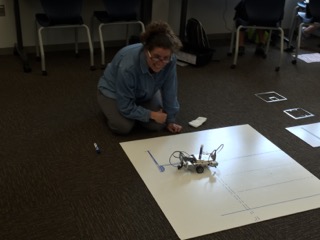
Don Domes gives his class of teachers a small number of LEGO pieces, access to some student-appropriate internet resources, a worksheet, markers, whiteboards, lots of hands on time to practice, and very little lecturing. Some teachers have no previous experience, some have a couple of years, but all are engaged and making progress at showing just how accurate a robot made of LEGO can be – not enough to make navigation by dead reckoning (sometimes called guess and check) the method of choice.
Why this approach?
- Informed by years of experience across teams and classes, students and adults
- Bypasses getting distracted by lots of parts and fun and fancy building
- Goes straight to simple programming, and builds on that step by step
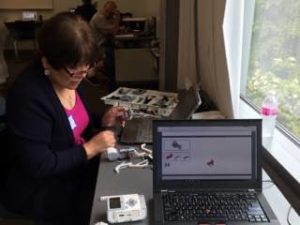 without dictating how.
 - Fosters the programmers in conducting multiple small experiments
- Easy to stop the action to discuss the pedagogy – “How does this make you feel? How would this make your students feel? What is the best ratio of students to robots? If you can’t meet that ratio, what can you do so kids aren’t waiting around and getting distracted/in trouble/bored?”
- Makes the need for application of sensors and alternate methods of navigation more real and more immediate
- Particularly tuned for the situation where there are more computers than robots, i.e. how to best make use of a computer lab.
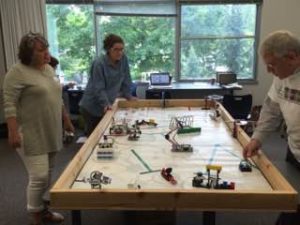 Where can you get in on this action? At SuperQuest 2016:
 PDUs or Graduate Credit are available. Stipends for qualifying teachers are an option.
If the Robots you are looking for are FIRST™ Tech Challenge (FTC), check out Dale Jordan’s course here. For Greg Smith’s VEX Robotics, look here.
Follow us on Twitter @oregoncsta, learn more at oregoncsta.org or the Oregon CSTA Facebook page.
Respectfully submitted,
Jo Oshiro
jo@oregoncsta.org